
EMI3News & insightInsight
Your CMMS is not the execution layer
Enterprise systems hold the asset record. Planning systems schedule the work. Neither of them sees the work being performed, and that gap is not a reporting problem to be fixed with another dashboard.
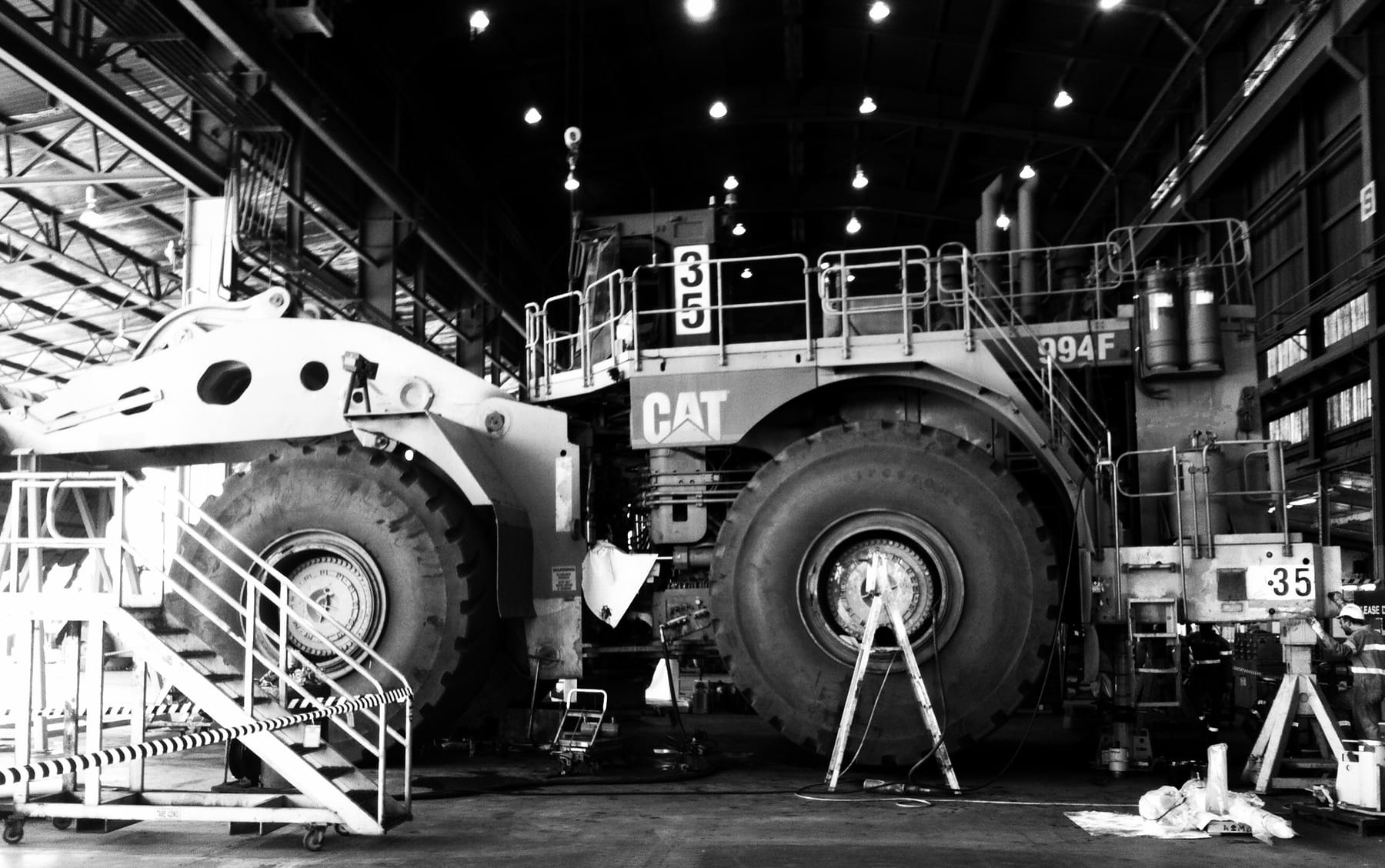
Ask a maintenance organisation whether it has a system of record and the answer is almost always yes. SAP, Maximo, an established CMMS, often more than one. Ask the same organisation to show you what actually happened during last Tuesday’s 500-hour service on haul truck 305 (every task, in sequence, with what was found and what was skipped) and the answer changes.
Someone will offer to go and ask the supervisor.
That is the gap. Not a missing report, not a data quality issue, and not something an integration will close. There is a layer of the technology stack where the work itself happens, and in most industrial operations it is not instrumented at all.
Four layers, and the one nobody owns
Industrial technology stacks tend to resolve into four recognisable layers. Enterprise systems hold the asset register, the work orders and the cost. Planning systems decide what should happen and when. Automation and control run the machine. Sensors and condition monitoring report what the machine says about itself.
Every one of those layers is well served by mature software. Between them sits the work: a person, a procedure, a machine, and a shift in which to get it done. That layer runs on paper, spreadsheets, laminated cards and what the crew happens to remember.
Most systems capture data after the work. The execution layer captures the work as it happens.
A work order closed at the end of a shift records that a service occurred. It does not record whether the procedure was followed, which steps were skipped and why, or what the technician saw that was not on the list. Those things are reconstructed later, from memory, and then entered as though they were observations.
Why another dashboard does not fix it
The instinct is to report harder. Build a compliance dashboard. Add fields to the work order. Require a photograph on close-out. Each improves the record slightly, and none of them changes where the record comes from: still a person remembering after the fact.
An execution layer inverts that. The instruction is delivered at the machine, in sequence, on the device the technician is already holding. Completion is recorded as each task closes. A finding is raised where it is found, with a photograph attached, and routed while the machine is still open.
- Variability narrows. Two crews on the same machine execute the same sequence, so outcomes stop depending on who was rostered.
- Findings arrive early. A defect reaches a planner in minutes rather than after the machine has gone back to work.
- The evidence exists. Not as a claim, but as a timestamped record of what was done, by whom, in what order.
What it is worth
Take an operation running 200 machines against a $200M annual maintenance budget. A two per cent improvement in reliability is roughly $4M of annual value, recovered from work that was already being paid for.
The assurance argument is harder to price and often matters more. When a regulator, an insurer or a board asks whether a control was actually applied, the organisation that can answer in minutes is in a materially different position from the one that begins an evidence hunt.
Was this useful?
We read every response. It decides what we write next.
We will not add you to a mailing list.
Keep reading
Product
Inside the limits, and still going wrong
A condition monitoring question captures a number and a photograph. The platform trends it across the fleet, watches the rate of change, and raises an alert while the reading is still comfortably inside its limits.
4 September 2026 · 7 min read
Insight
Chaos, constrained: why maintenance behaves like a complex system
Small deviations at the start of a shift produce very large differences by the end of it. You cannot remove that sensitivity, but you can bound it, the way aviation and surgical systems do.
29 July 2026 · 6 min read
Insight
Work deconstruction, not process abstraction
Most vendors digitise the description of the work. Taking the task apart at the machine produces something quite different, and it is why field adoption behaves the way it does.
15 July 2026 · 7 min read