
EMI3News & insightPractice
Is the supervisor actually on the job?
You expect supervisors to be out there: checking progress, safe work practice, quality of workmanship. Proving it is another matter entirely.
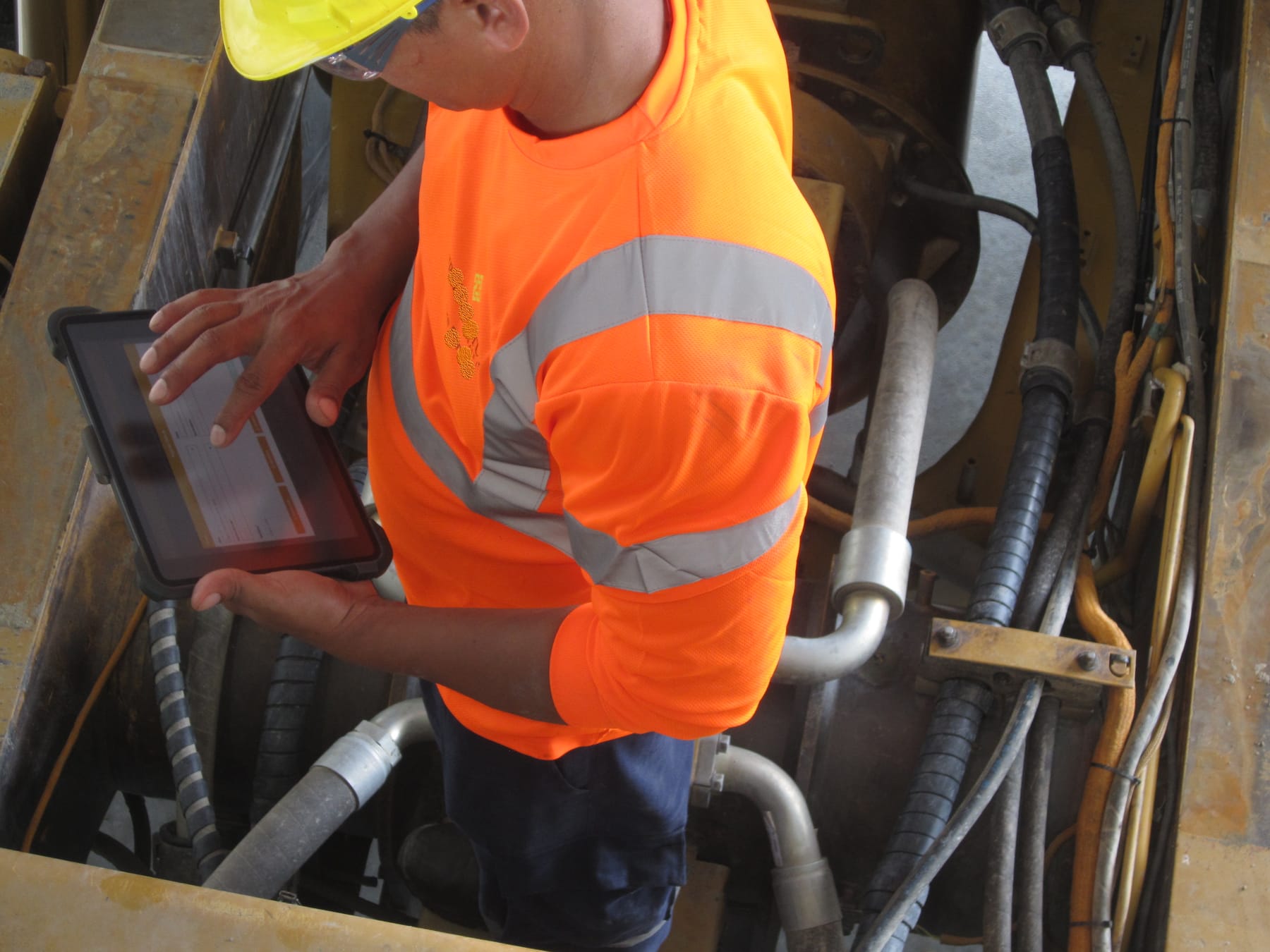
Ask any maintenance manager whether they expect their supervisors to be on the job (checking on progress, on safe work practices, on the quality of workmanship) and the answer is immediate. Of course.
Ask them to show you it happened last Thursday and the conversation changes.
It is difficult unless there is a simple way for a worker to record that their supervisor attended, stamped with the time, against a reason that everyone records the same way.
Why assumption is not evidence
Supervisory presence is one of those things every organisation believes it has and very few can demonstrate. It is not that supervisors are absent. It is that presence leaves no trace, so nobody can tell a good week from a bad one, and nobody can tell which crews are actually being supported.
When something does go wrong, the question that follows is always the same: was anyone overseeing this work? An answer built on recollection is worth very little.
Recording the interaction
Both ZoneMaintenance and RouteMaintenance let a technician capture the moment a supervisor attends. The entry is date and time stamped, and the reason the work paused is chosen from a defined list, what we call pause reasons. It takes seconds, it happens at the machine rather than in an office afterwards, and it asks nobody to write up a conversation.
That constraint is the point. Because every pause reason comes from the same list, entries from different crews, shifts and sites can be counted and compared. Free text cannot be. What the platform holds is the fact of attendance, the time it happened, and a reason in a shared vocabulary.
What that produces is not surveillance. It is a record that supports the supervisor as much as it holds anyone to account:
- How often interactions are happening, by crew, by shift, by area.
- Which pause reasons are being selected, and which never appear at all.
- Where they are not happening at all, which is usually the more useful finding.
The pattern matters more than any single entry. A crew nobody has spoken to in three weeks is visible in a report long before it becomes visible in an incident.
Was this useful?
We read every response. It decides what we write next.
We will not add you to a mailing list.
Keep reading
Product
Inside the limits, and still going wrong
A condition monitoring question captures a number and a photograph. The platform trends it across the fleet, watches the rate of change, and raises an alert while the reading is still comfortably inside its limits.
4 September 2026 · 7 min read
Insight
Your CMMS is not the execution layer
Enterprise systems hold the asset record. Planning systems schedule the work. Neither of them sees the work being performed, and that gap is not a reporting problem to be fixed with another dashboard.
12 August 2026 · 8 min read
Insight
Chaos, constrained: why maintenance behaves like a complex system
Small deviations at the start of a shift produce very large differences by the end of it. You cannot remove that sensitivity, but you can bound it, the way aviation and surgical systems do.
29 July 2026 · 6 min read